

Introduction
Who we are influences the questions we ask, the methods we practice, and the conclusions we draw from data.
This, in large part, is why the best science happens when we include people from a diversity of life experiences, perspectives, and values. Not only is this inclusion key to their development, but the questions children ask about the world are often poignant, and their solutions even more so.
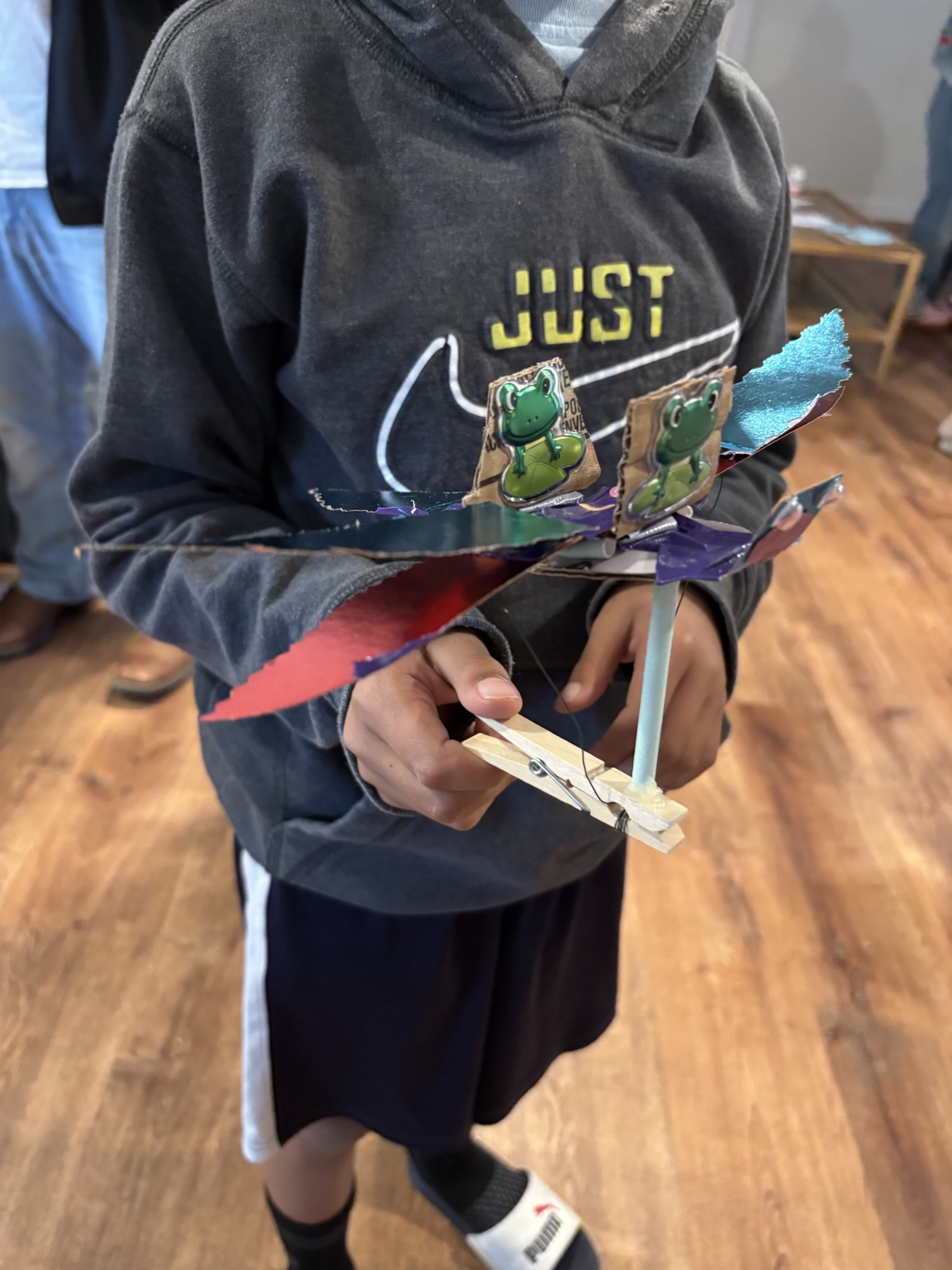
NoCo Science Workshop is dedicated to kids having authentic, hands-on experiences in science. This can look like kids using up-cycled, repurposed, and everyday materials to create a project that explores a specific theme. But it could also look like starting a community garden, or an environmental monitoring project at their school, or including other organizations that specialize in engineering, fire monitoring, veterinary science, chemistry, etc.
We act as a vehicle for kids’ curiosity and free exploration and are open to learning together with them to answer the questions they have about the world.
We want kids to see how relevant science is to their day-to-day lives, to understand that they are more than capable of using science to solve issues relevant to them and their communities, and to become more scientifically literate throughout their lives. We follow a similar model as our partners, the Little Shop of Physics and the Global Alliance of Community Science Workshops. (An in depth evaluation of several Community Science Workshops can be found at Carroll et al. 2014.) We also have connections to the Natural Sciences Outreach and Education Center (hosts of the Triunfo mentoring program) and several university research laboratories with focuses on ecology.

NoCo Science Workshop’s strategy for engaging the community is informed by the literature, our partnerships with informal science groups such as the Little Shop of Physics and the Global Alliance of Community Science Workshops, and what would have interested us as kids.
NoCo Science Workshop targets immigrant and low-income communities in Fort Collins. These communities face higher barriers to engaging in informal science education due to language, transportation, awareness, education level, and sense of safety and belonging (Bruyere et al 2009). However, their low attendance does not reflect a lack of interest, as kids from marginalized communities show more interest in informal science education than those from dominant cultural groups (Wenner 2003). This trend is especially true when they can identify how science is relevant to their personal lives (Basu et al. 2005).
Here, I present a short literature review of peer-reviewed studies of informal science education (ISE) programs for students of various marginalized identities. The case studies evaluate the impact of informal science education programs on students (Habig and Gupta 2021, Bouzo 2012) and their families (Bouzo 2012), teachers in training (Avraamidou 2015), and ISE organizations (Lau et al. 2025).
Engaging Students, Teachers, and the Community.
Informal science education (ISE) takes place outside the traditional classroom. It allows students to explore freely in a safe, low-pressure environment in the community.. ISE introduces novel methods of teaching science within the classroom that increase teachers’ confidence in science curriculum. It engages the entire family as parents and guardians are welcomed and encouraged to participate in learning with their children, such as Open House at Little Shop of Physics.
Individuals understand science more deeply when they have access to an environment where they can push the limits of their knowledge through self-guided exploration and discovery, as modeled in Carroll et al. 2014.
We review relevant peer-reviewed literature to understand how ISE functions, especially within marginalized communities. Here, we investigate four major questions. (1) How should ISE organizations form partnerships across the community? (2) What specific barriers do ISE organizations need to remove to engage marginalized communities? (3) How does free exploration of science in ISE programs impact outcomes for students, families, teachers, and the community?
Community Partnerships
Cultural change requires collaboration between individuals, departments and institutions, topical organizations, funders, and national organizations. ISE connects scientists to the community. This ensures that cultural change can occur and that practicing scientists are answering questions that matter to the community (Lau et al. 2025). Therefore, it is essential that we understand how to form successful partnerships. Bouzo (2012) outlines partners’ needs as follows.
Partners need (1) communication, (2) shared decision making, (3) shared resources, (4) expertise and credibility, (5) sufficient time to develop and maintain relationships, (6) being present, (7) shared youth-development orientation, and (7) recognition of other partners’ priorities (Bouzo 2015).
Large institutions (like museums) can positively impact marginalized communities when they invest into ISE programs (Habig and Gupta 2021).
Barriers to Engagement
Students from marginalized communities are interested in science, but barriers can keep them from attending ISE programs. These barriers include cost, transportation, time, cultural connection, language, and identity with the level of representation in STEM fields, messages of empowerment, and trust or familiarity (Bouzo 2012). Black (11.9%) and Hispanic (15.6%) adults are underrepresented in STEM fields in the USA (5.6% and 7.5% respectively). Adult women are also underrepresented, at 29%. Inequitable access to STEM learning experiences exacerbates these results (Habig and Gupta 2021). Teachers can feel intimidated by science curriculum and disconnected from scientists and their work (Avraamidou 2015). Public misunderstanding and distrust of science weakens all STEM fields. ISE can bridge the gap that separates community members from scientists that impact their communities (Lau et al 2025).
Benefits of Free Exploration
Kids learn most outside the home. Informal education is a gateway for kids to enter (or understand) STEM in the future. Community members can influence research by connecting with scientists (Lau et al 2025). Including kids’ support systems creates an environment where ISE extends into the home and can change families’ attitudes toward science and their chosen activities. Bouzo (2012) evaluated the impact of the a specific ISE program (SEED) for marginalized (Black, Latino) families at CASA Elementary School in Denver, CO. The study took place over 8 months. Three families were selected based on their engagement level (high, medium, low). The entire family submitted voluntary surveys and participated in conservational interviews. The results showed that for the family with the highest engagement in ISE, the entire family gained a deeper appreciation for science, chose to engage in more ISE activities (zoo, aquarium, museum, etc.) and developed a sense of stewardship for the land. For those with lower engagement level, they deeply valued the enjoyment of their kids and thought that it was overall positive.
This pattern was consistent for older students with more independence from their support systems. Habig and Gupta (2021) followed a group of high school students from underrepresented (Black, Latino) communities who participated in a longterm ISE program at a museum. These students assisted researchers at the museum over a multi-year period. They had longterm positive gains. Their interest in STEM increased even after the program ended and they maintained their mastery of science skills and practices. Even teachers learn more about science when they can freely explore.
Even teachers benefit from connecting with scientists and experts through ISE programs, gaining confidence in science curriculum and feeling empowered in the classroom (Avraamidou 2015). In a study of preservice elementary school teachers, it was found that ISE changes pre-existing negative orientations toward science in new teachers because they enjoy teaching it more when it’s fun (Avraamidou 2015).
Recommendations
Bouzo (2012):
- Community partnerships focused engaging marginalized communities should include programs that come from within the communities themselves.
- Communities face many barriers to attending ISE programs, a major ones being time and transportation. At-home extension activities for families with limited time and transportation.
- Often, ISE organizations exist with the goal of educating the public about science. It is essential to strengthening the connection between ISE activities and its relevance to daily life to ensure community members are forming deep connections.
Habig and Gupta (2021)
- Students, especially from marginalized backgrounds (Black, Latino) should be exposed to authentic STEM experiences to develop and maintain interest in science.
- These experiences should be relevant to the students’ lives.
- ISE organizations should follow or incorporate the Next Generation Science Standards (NGSS).
Avraamidou (2015)
- Teachers should Preparation for teachers should include an element of ISE.
Lau et al 2025
- Track program effectiveness to garner support from higher institutions and funders.
- Align goals with funders’ missions.
- Collaborate with policy makers, administrators, leaders, and faculty.
- Consistently engage community members.
Conclusions
NoCo Science Workshop is still a new community organization. We have room to grow, and we aim to do so thoughtfully. Our mission is to share science with marginalized communities in Fort Collins. We aim to continuously improve our ability to realize that mission. To that end, we will continue to investigate best practices from published literature and other trusted sources. We will also leverage our partnerships from across and within our served communities.
If you would like to continue to support our work, please consider volunteering and (or) donating. We need funds and passionate people to continue to serve our community!


References
Avraamidou, Lucy. “Reconceptualizing elementary teacher preparation: A case for informal science education.” International Journal of Science Education, vol. 37, no. 1, 15 Oct. 2014, pp. 108–135, https://doi.org/10.1080/09500693.2014.969358
Basu, S.J., & Barton, A.C. (2005). Developing a sustained interest in science among urban minority youth. Journal of Research in Science Teaching, 44(3), 466-489.
Bouzo, Suzanne. “Engaging Underserved Audiences in Informal Science Education through Community-Based Partnerships.” ProQuest, 2012, www.proquest.com/openview/9ec024acc57d24410d37a9025c08f159/1?
Bruyere, Brett L., et al. “A closer examination of barriers to participation in informal science education for Latinos and Caucasians.” Journal of Women and Minorities in Science and Engineering, vol. 15, no. 1, 2009, pp. 1–14, https://doi.org/10.1615/jwomenminorscieneng.v15.i1.10
Carroll, Becky, et al. “The Community Science Network Story: Becoming a Networked Organization.” Inverness Research, 2014, www.inverness-research.org/abstracts/ab2014-02_Rpt_CSW-Network-CaseStudies_032414.html
Habig, Bobby, and Preeti Gupta. “Authentic stem research, practices of science, and interest development in an informal science education program.” International Journal of STEM Education, vol. 8, no. 1, 2 Nov. 2021, https://doi.org/10.1186/s40594-021-00314-y
Lau, Alexandra C., et al. “Informal Education Is Essential to Physics: Findings of the 2024 JNIPER Summit and Recommendations for Action.” arXiv.Org, 24 July 2025, arxiv.org/abs/2507.18851
Wenner, George. “Comparing poor, minority elementary students’ interest and background in science with that of their white, affluent peers.” Urban Education, vol. 38, no. 2, Mar. 2003, pp. 153–172, https://doi.org/10.1177/0042085902250483
Leave a Reply